My Role
Led UX & UI design for a startup news platform, optimizing search, navigation, and data accessibility across desktop & mobile.
Company
The Arc Web
Industry
News/media & tech
Collaboration
Aaditya Saah
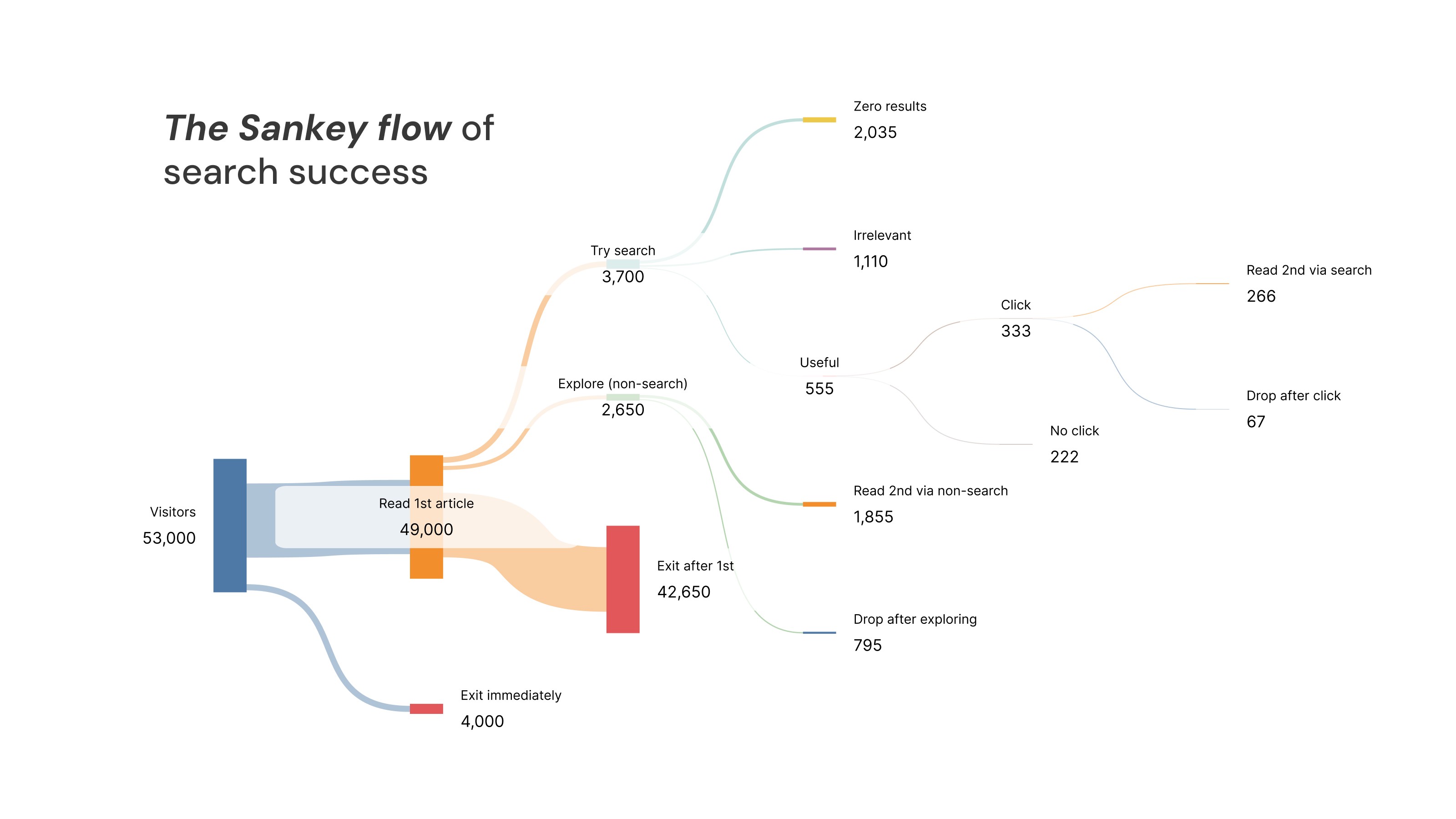
When I joined The Arc Web, more than half of the users left without reading more than 1 article.
The Arc Web is a discovery platform that curates stories about startups, authors, and companies for an audience split between founders, tech enthusiasts, and investors. And like every other news platform, retention was clearly important for sustenance.
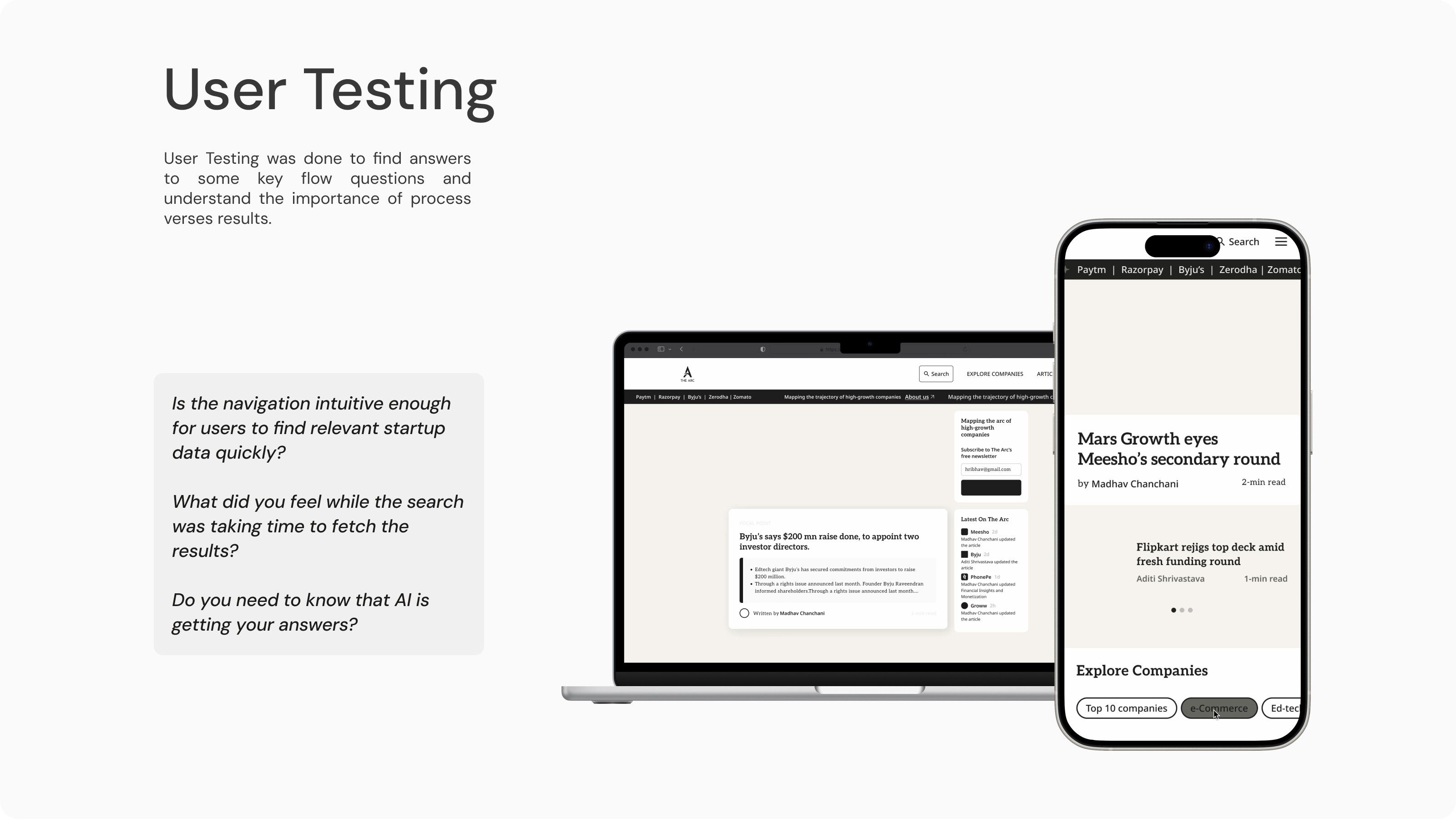
To know more about the problem the team conducted quant and qual research, giving us a better understanding of our demographics
Early analytics made it clear that retention depended on users finding more than one story, and the broken keyword search was a bottleneck for exploration.
The data showed that users rarely explored beyond their first article, and search emerged as the biggest blocker. The system only returned exact title matches and couldn’t surface related content, authors, or companies. With most queries leading to zero or irrelevant results, readers had no clear next step, making search a dead end rather than a discovery tool.
The earlier search worked like a basic keyword lookup, limited to exact titles or word matches.
The search results were inconsistent, often irrelevant, and rarely led users to a second article.
I led the UX strategy to make discovery core to the product, focusing on building a search experience that could actually connect content and users.
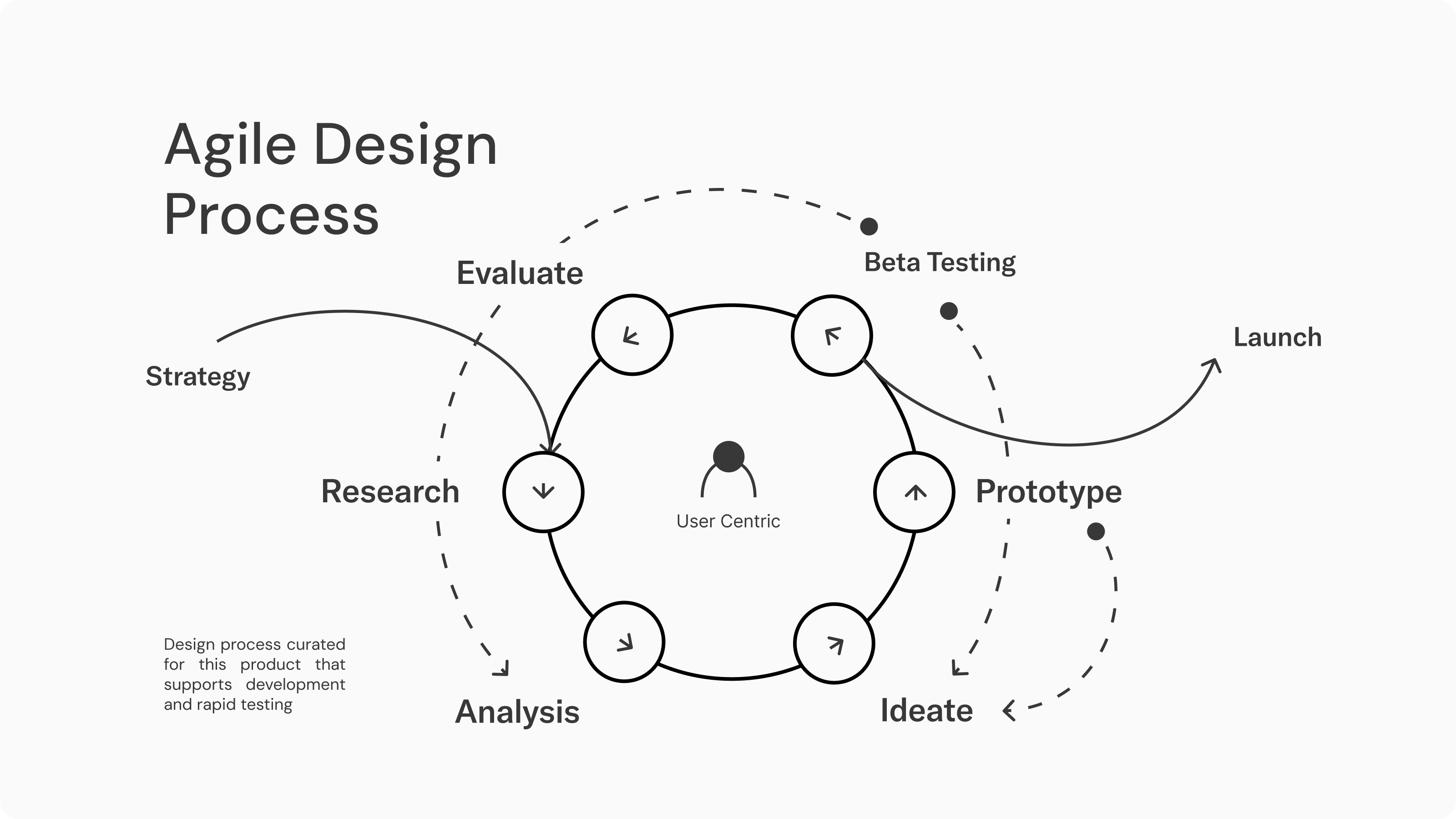
As lead designer, I owned the UX strategy, user flows, and prototyping for the new search experience. I worked with founders to set product direction and with developers to map AI capabilities into usable patterns. My computer science background helped me bridge technical constraints with design decisions, ensuring the experience scaled seamlessly on a hybrid LLM + vector search stack.
We adopted an agile design approach to match the fast-moving pace of the startup, shipping quickly, testing rapidly, and continuously improving the user experience.
Exact-match search blocked discovery, so we rebuilt it into a contextual discovery flow.
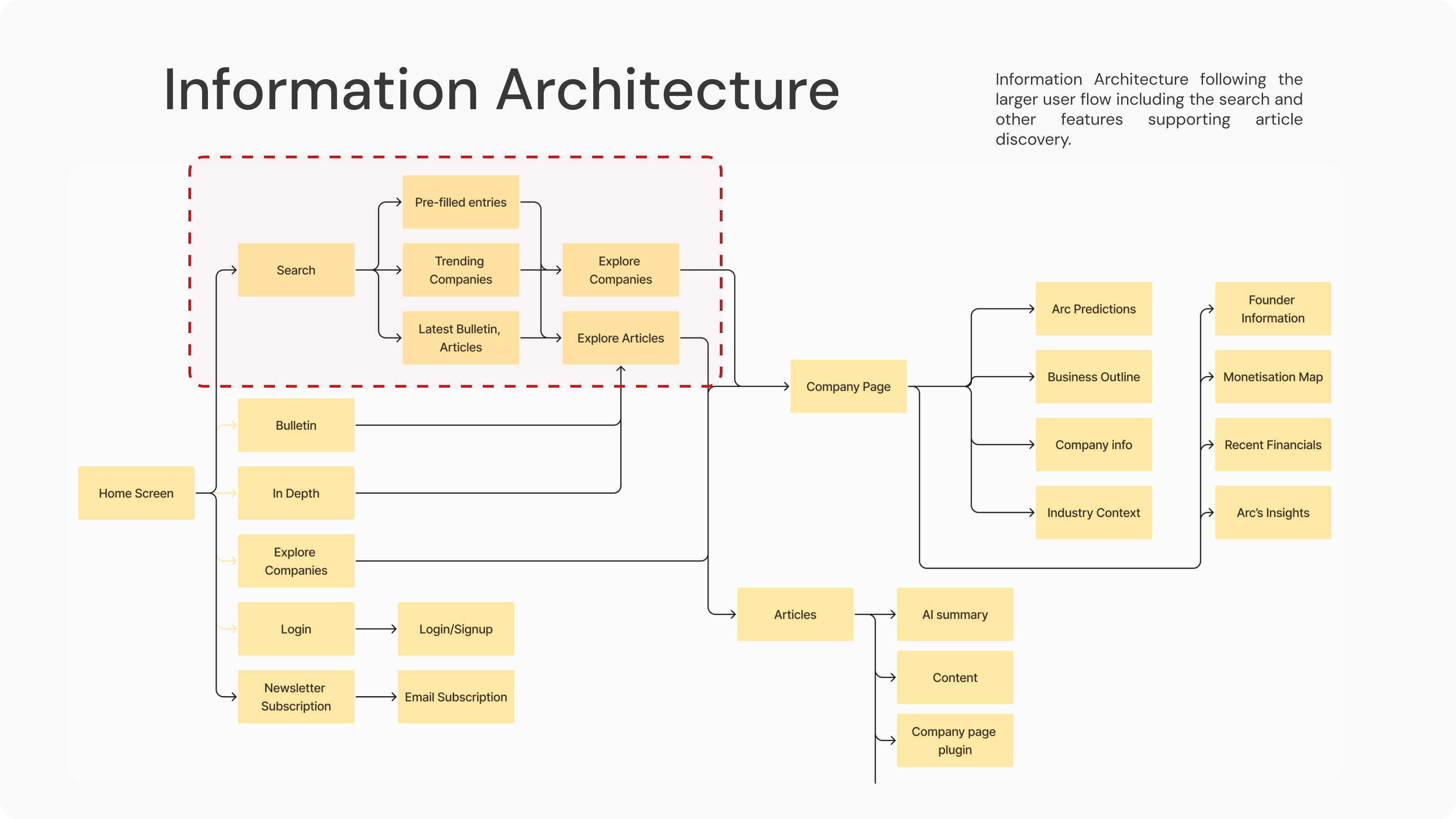
The redesign shifted from rigid keyword matching to contextual discovery, using AI to suggest related terms and connect articles with authors and companies. I designed a dynamic interface that adapted layout and hierarchy to each query, reducing dead ends and encouraging deeper exploration. The goal was to make the experience feel fluid and trustworthy, with clear information scent so users always understood why a result mattered.
Every design choice shaped how users discovered content, and the new search turned engagement into retention.
Our goal was to transform search from a rigid lookup tool into a fluid discovery system. The redesign emphasised context (showing related terms and entities), intent (adapting results to how people explore), and trust (making rankings and hierarchies transparent). Together, these principles reshaped how users navigated the platform, connecting them with more content, keeping them engaged for longer, and giving them a reason to return.
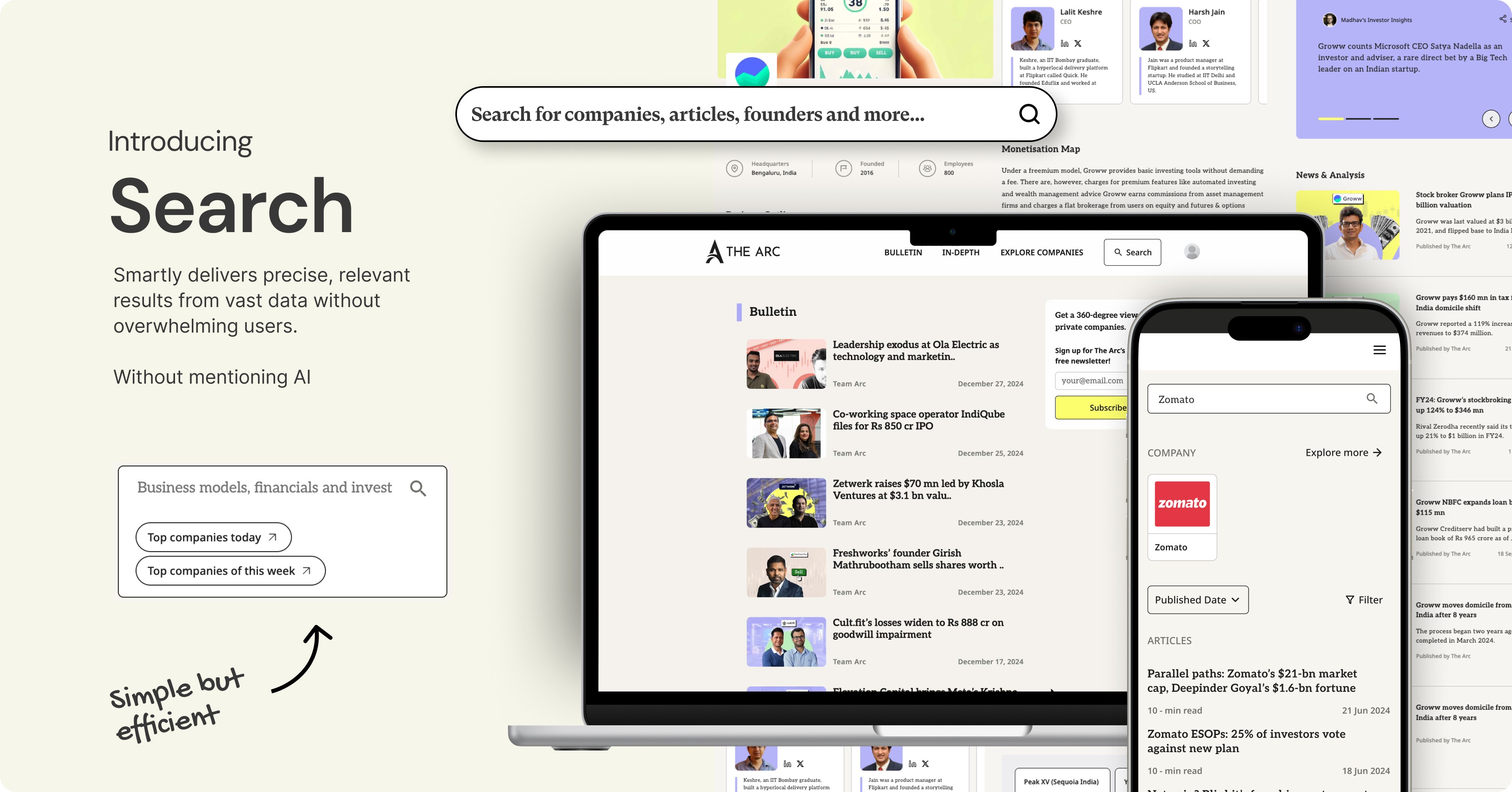
Active Search
Proactive suggestions reduced the “query-formulation cost” in exploratory tasks, keeping people in the flow by increasing information scent and giving immediate, higher-promise paths to follow.
Users now expect smart suggestions.
Contextual Article Search
Semantic (LLM + vector) matching fixes the vocabulary-mismatch problem—linking user phrases to relevant stories even when titles/keywords don’t align.
Contextual Company Search
Entity-centric search lets people explore sets—companies, founders, industries—and the relationships between them, accelerating sensemaking for investors and founders.
This supports exploratory search (not just lookup): users alternate query and browse over connected entities to discover opportunities faster.
Proving that better search drives retention and engagement
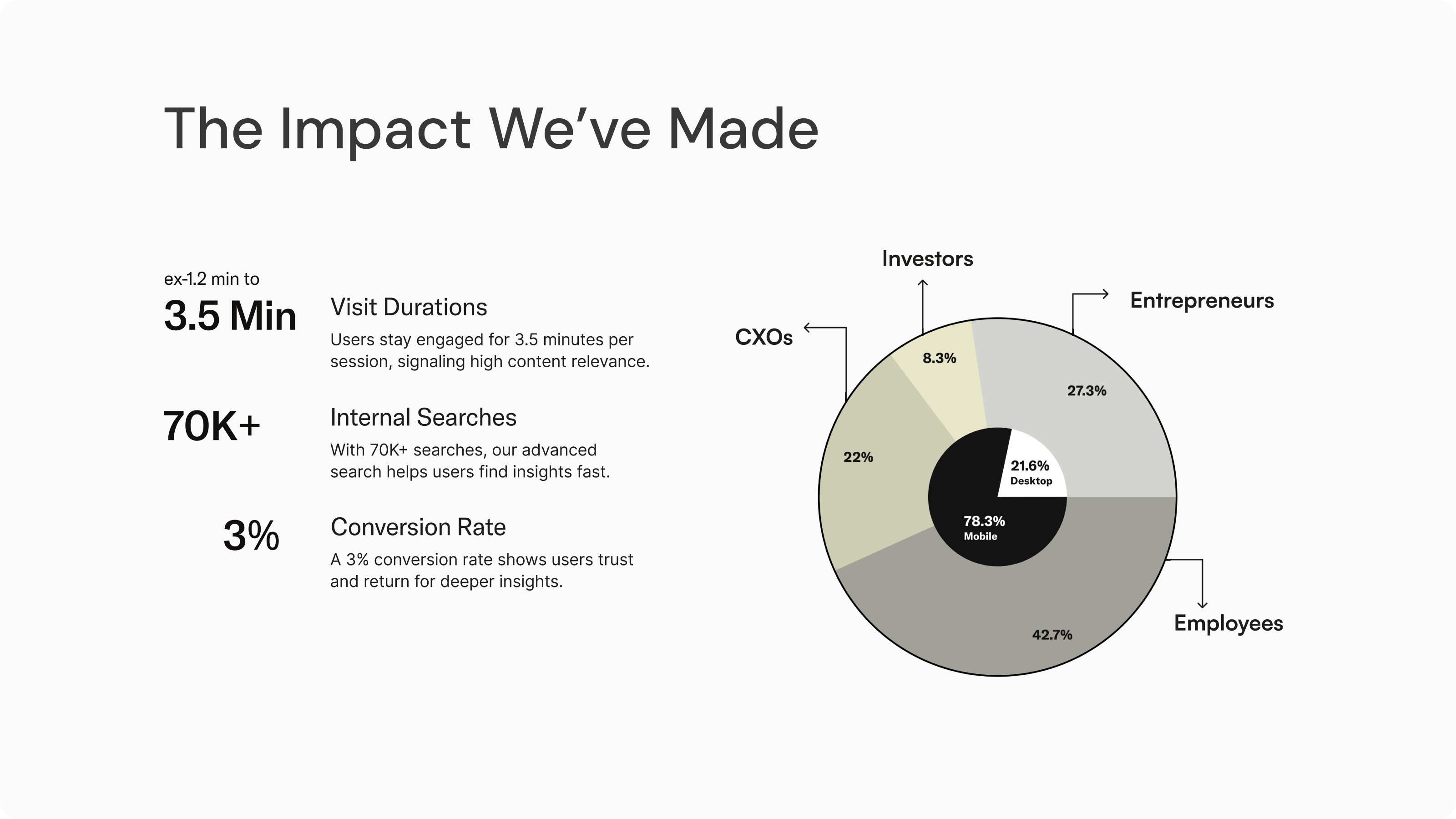
Redesigning search wasn’t just a usability win, it changed how users interacted with the entire platform. The impact showed up quickly in both numbers and behaviour. Within weeks of launch, drop rates fell by 16.3%, and average engagement rose to 3.5 minutes per session, up from single-article visits. Search-to-click conversions climbed steadily as users explored multiple paths through content. The contextual system handled over 70,000 internal searches per month, and 3% of users converted into profiles or newsletter sign-ups directly through search, proving it had become a retention driver rather than a dead end.