My Role
Audited and restructured the design process, introducing a UX system that improved collaboration and efficiency in a disconnected scaling team.
Company
Antwalk
Industry
Employee management
Dreamfolks asked us to design and launch a new website in two weeks for a major product event.
Dreamfolks is India’s largest airport hospitality aggregator, with a 90% market share and services spanning 140+ countries. For their global B2C launch, the website wasn’t a marketing asset, it was the stage. A two-week deadline meant scope and execution had to be ruthless and precise.
Two weeks left no room for handoffs, so we needed one process that could move design, build, and content together.
The old way of working, design, wait for approval, handoff to dev, fix errors, repeat, would never fit the timeline. Multiple stakeholders and moving parts meant every design needed green lights before it could progress. The process itself was the bottleneck, not just the workload.
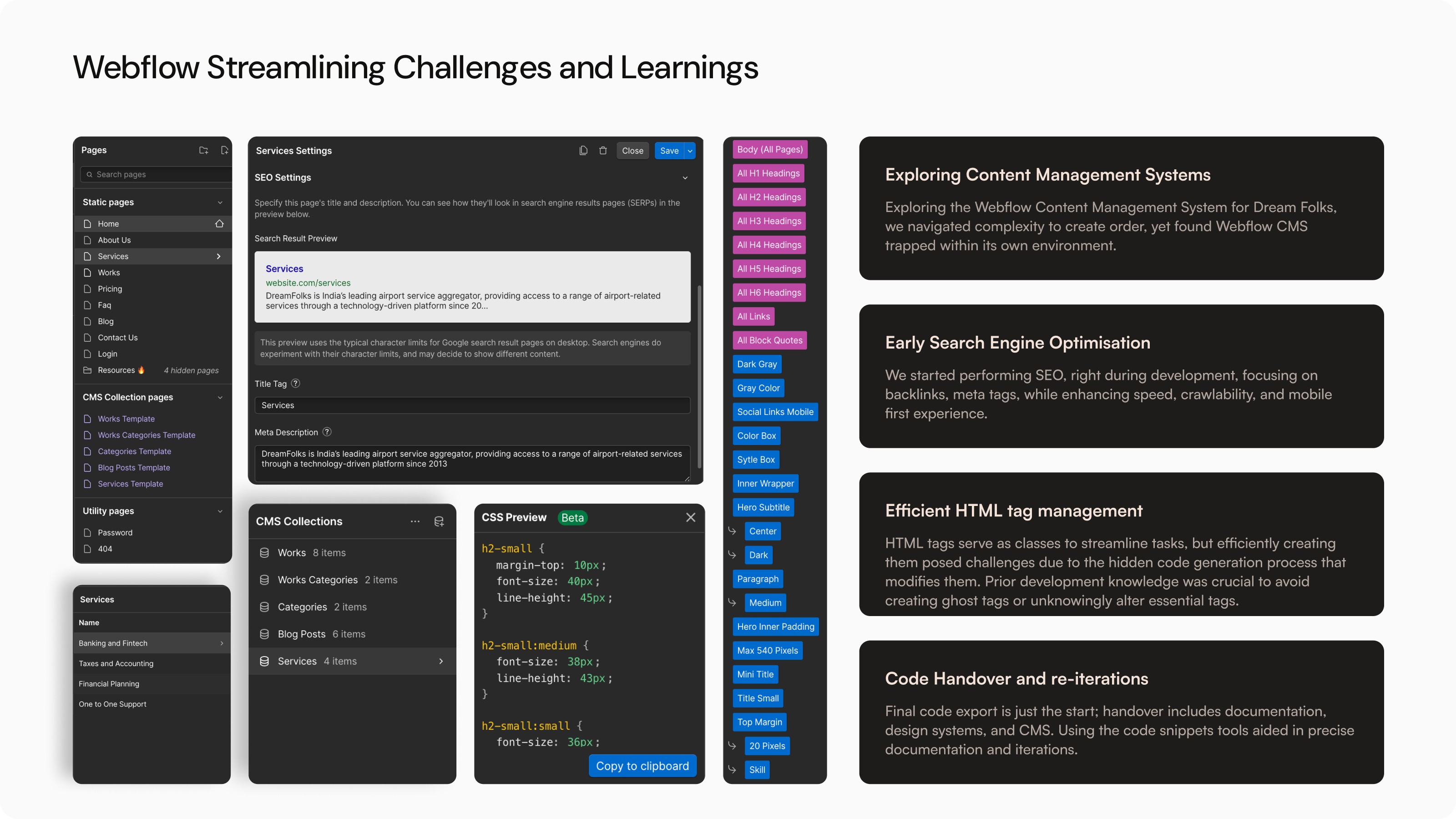
As a product architect, I introduced Webflow to collapse design and development into a single track.
With a background in software engineering, I knew Webflow could bypass handoff delays and give us production-ready builds as we designed. I set up a design system, CMS collections, and reusable components inside Webflow so stakeholders could review live progress daily, instead of static decks. This choice turned an impossible cycle into a continuous flow.
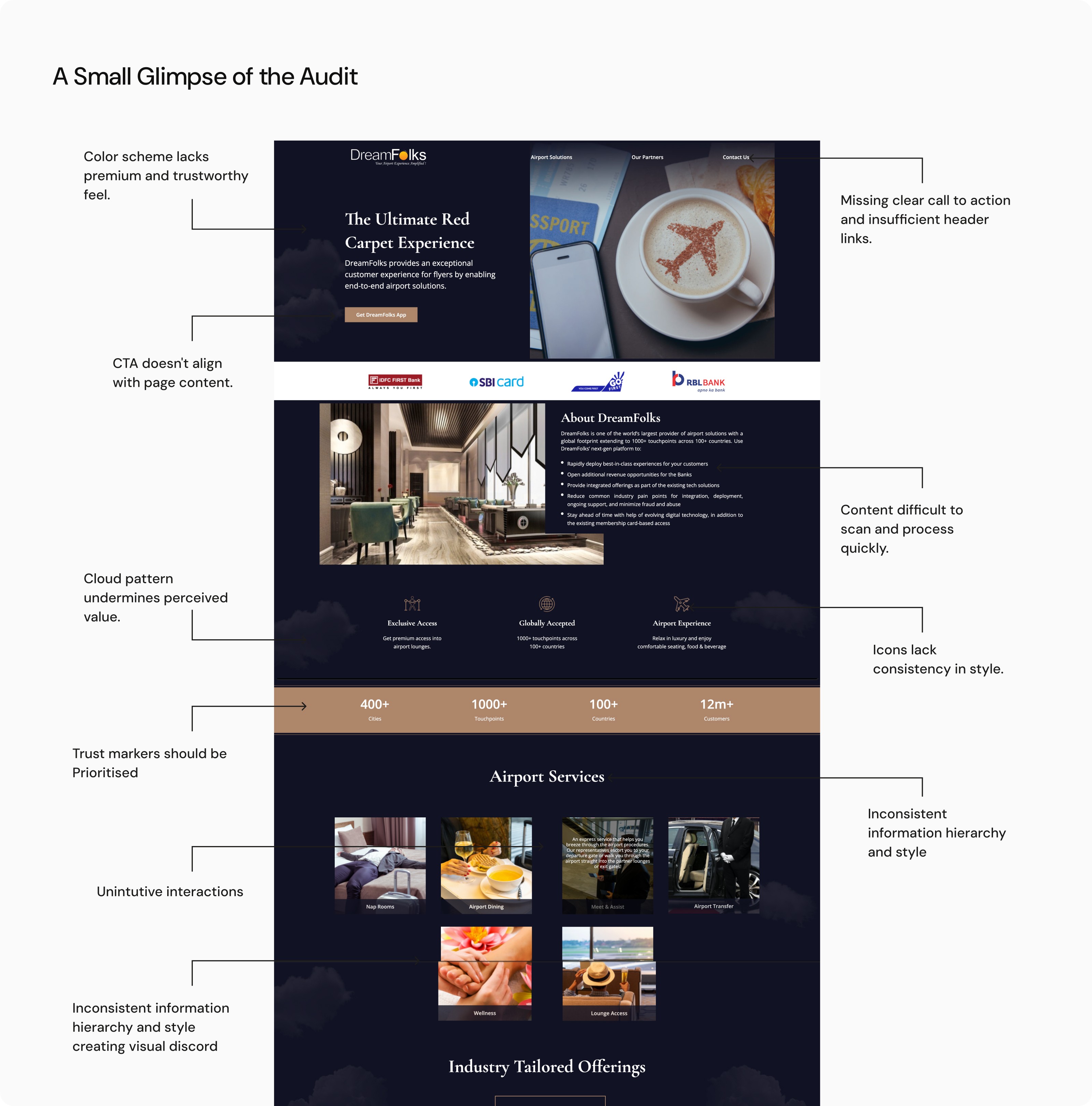
We ran a fast audit to decide what to fix first and to cut rework across visuals, navigation, and interactions.
The audit blended heuristic review, Lighthouse scans, and content mapping. Pain points were clear: inconsistent imagery, flat interactions, and an IA that buried B2C offerings under legacy B2B copy. By sequencing fixes—visual hierarchy, nav clarity, and interactive polish—we cut scope creep and avoided late pivots.
In parallel, we set up an AI image workflow that replaced a photoshoot and kept more than 50 visuals on brand.
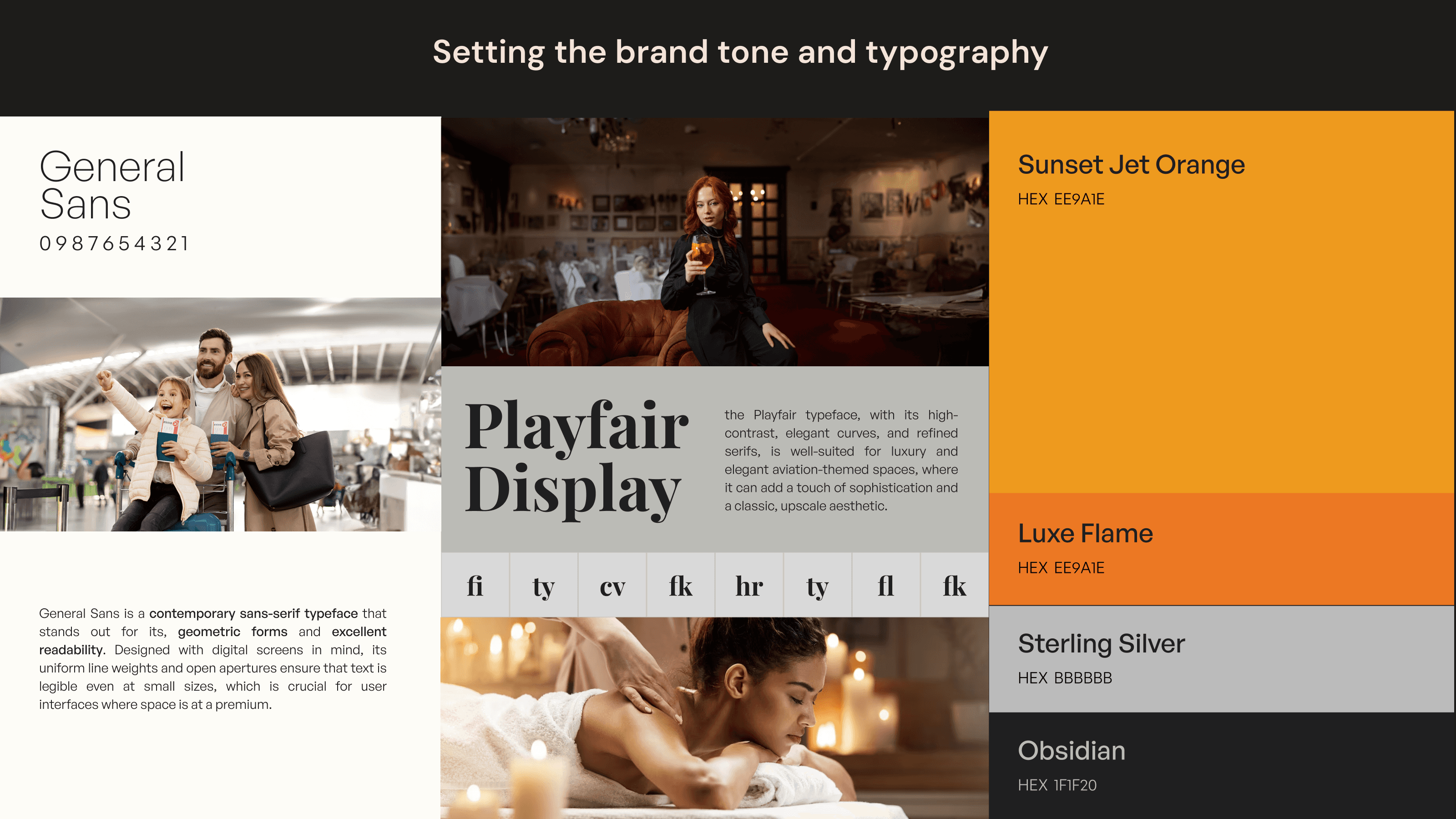
A two-week shoot was off the table. Instead, we built a spec for tone, composition, and palette, then used Firefly, Stable Diffusion, and Photoshop to generate, normalize, and export images. Assets were compressed into WebP and linked via Webflow CMS. This pipeline saved ~2 weeks of prep and produced brand-consistent imagery on demand.
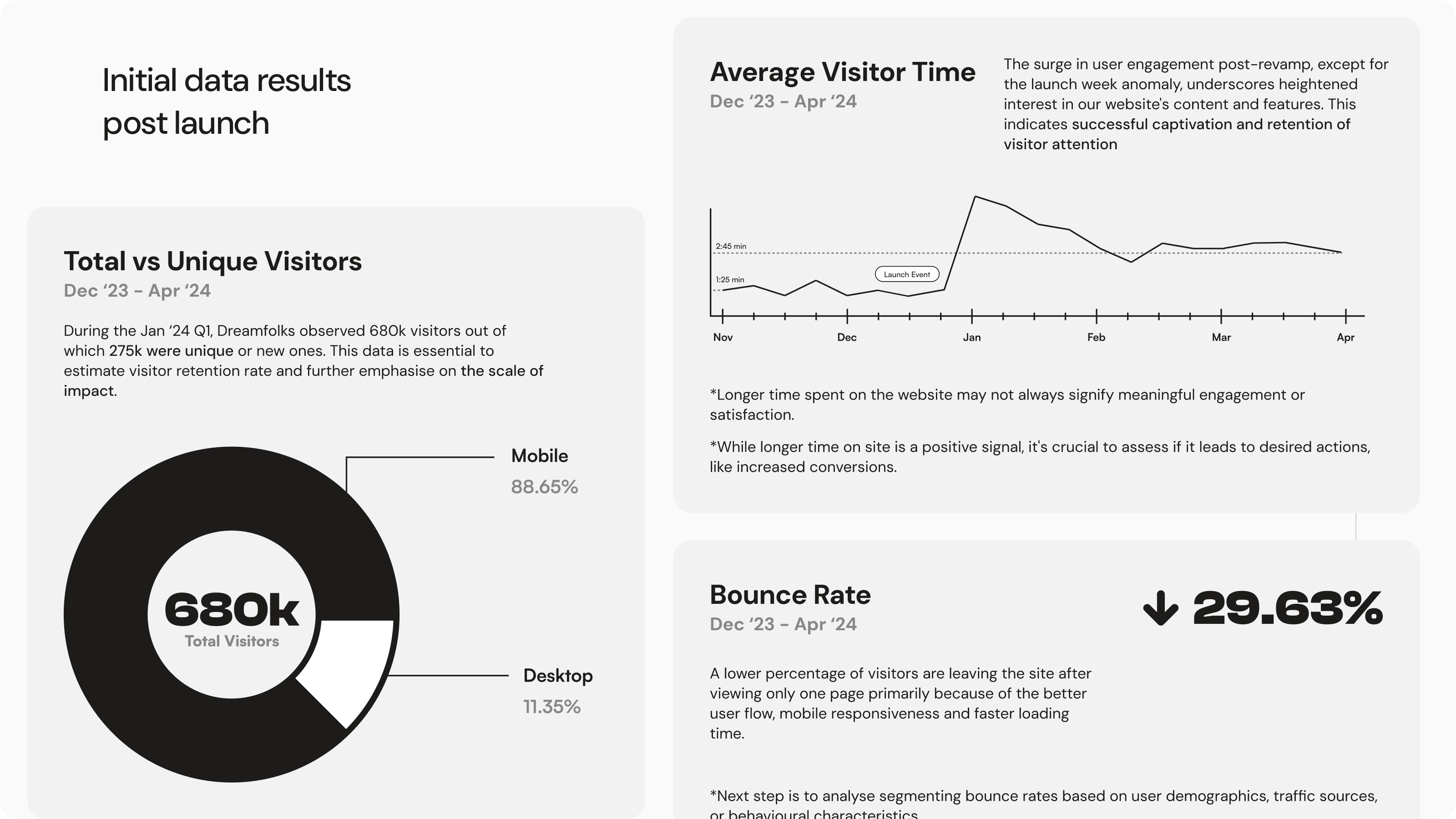
We measured outcomes that matter to the business, including form completion, time to conversion, search visibility, and accessibility, to prove the changes worked.
The redesign lifted session time by 18%, but we looked deeper: form completion jumped from 32% to 51%, average time-to-conversion fell by 40%, and SEO impressions rose 22% within the first month. WCAG scans flagged fewer than 5% contrast/accessibility issues, proving we delivered speed without sacrificing usability.