
My Role
Led UX & UI design for a startup news platform, optimizing search, navigation, and data accessibility across desktop & mobile.
Company
The Arc Web
Industry
News/media & tech
Collaboration
Aaditya Saah
I Noticed a Gap in How BeReal Treats Profiles and Tried to Fix It
I’ve been using BeReal for over two years. It’s one of the few social apps I never felt the need to “optimize” myself for. You open it, post once, react, and leave. That’s the magic.
But the profile always felt like an unfinished thought. Nothing was obviously wrong, yet every time I landed there, I had to pause and figure things out — who I was seeing, why I was seeing them, and what I was supposed to do next. That friction stood out precisely because the rest of BeReal is so intentional.
This case study is an attempt to close that gap without breaking what makes BeReal feel honest.
Initial critique of the current BeReal profile screens
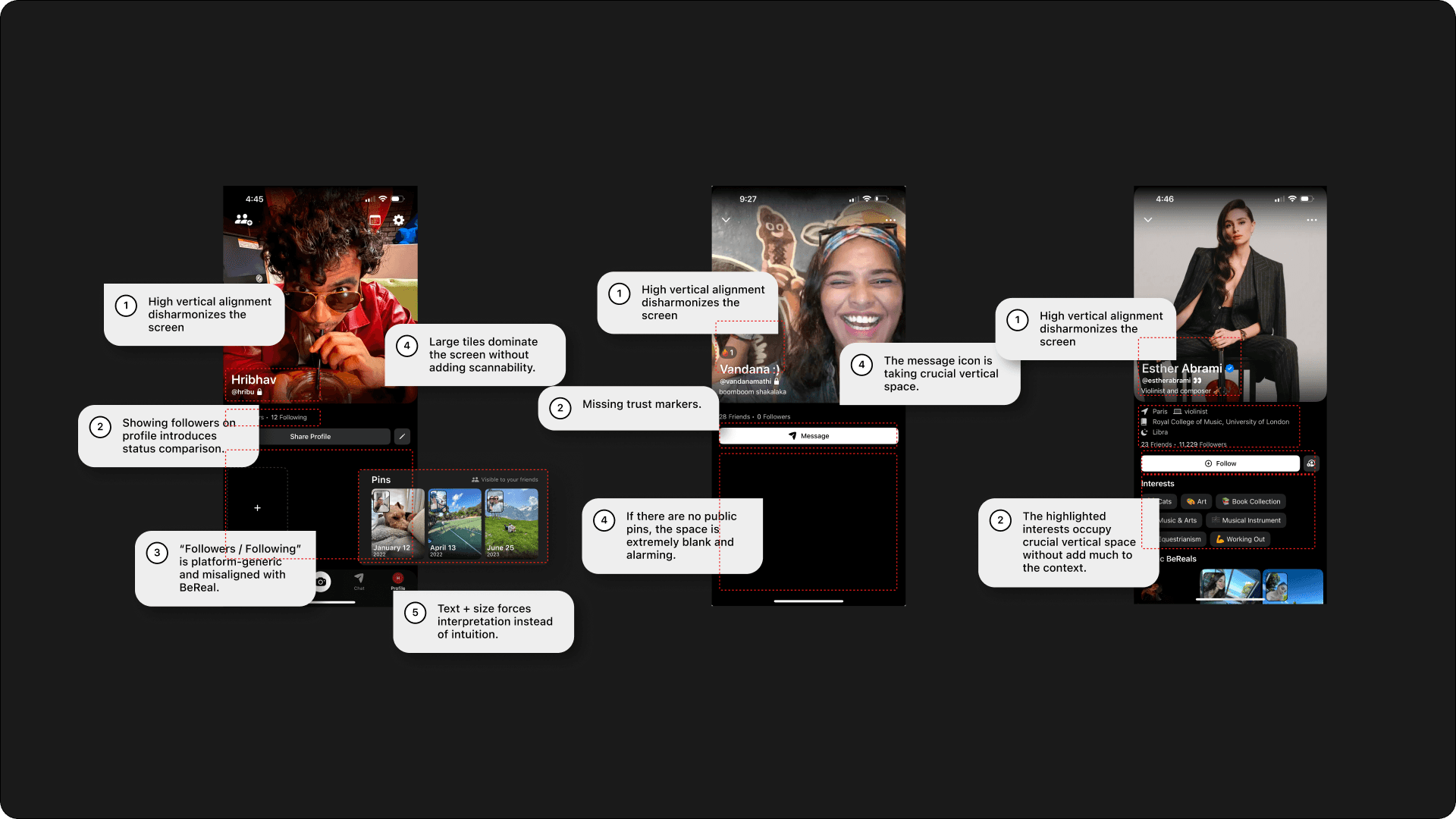
BeReal Is Built on Restraint, Which Makes Profiles a Tricky Surface
BeReal isn’t trying to be a creator platform or a performance stage. It’s a presence-based social app where showing up matters more than showing off.
That philosophy makes profiles risky. Add too much, and you introduce pressure. Add too little, and users are left guessing. Most social apps lean into metrics and self-curation here. BeReal can’t afford to. This tension is what made the profile problem interesting rather than obvious.
Initial critique of the current BeReal profile screens
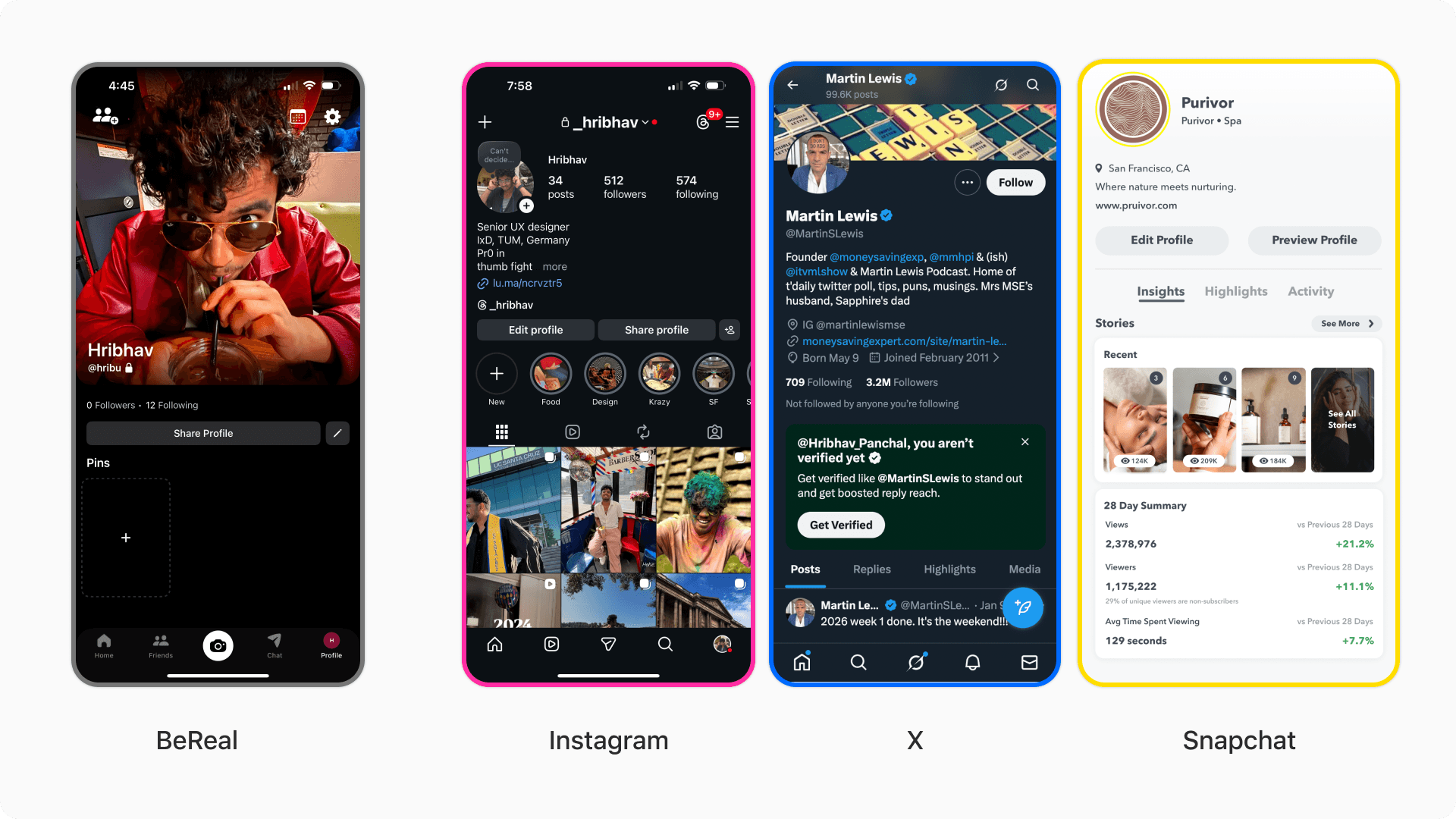
The Problem I was solving for was Missing Context and Trust
Across different profile types, I kept running into the same questions. Who is this person to me? Why am I seeing them right now? What does this screen expect me to do?
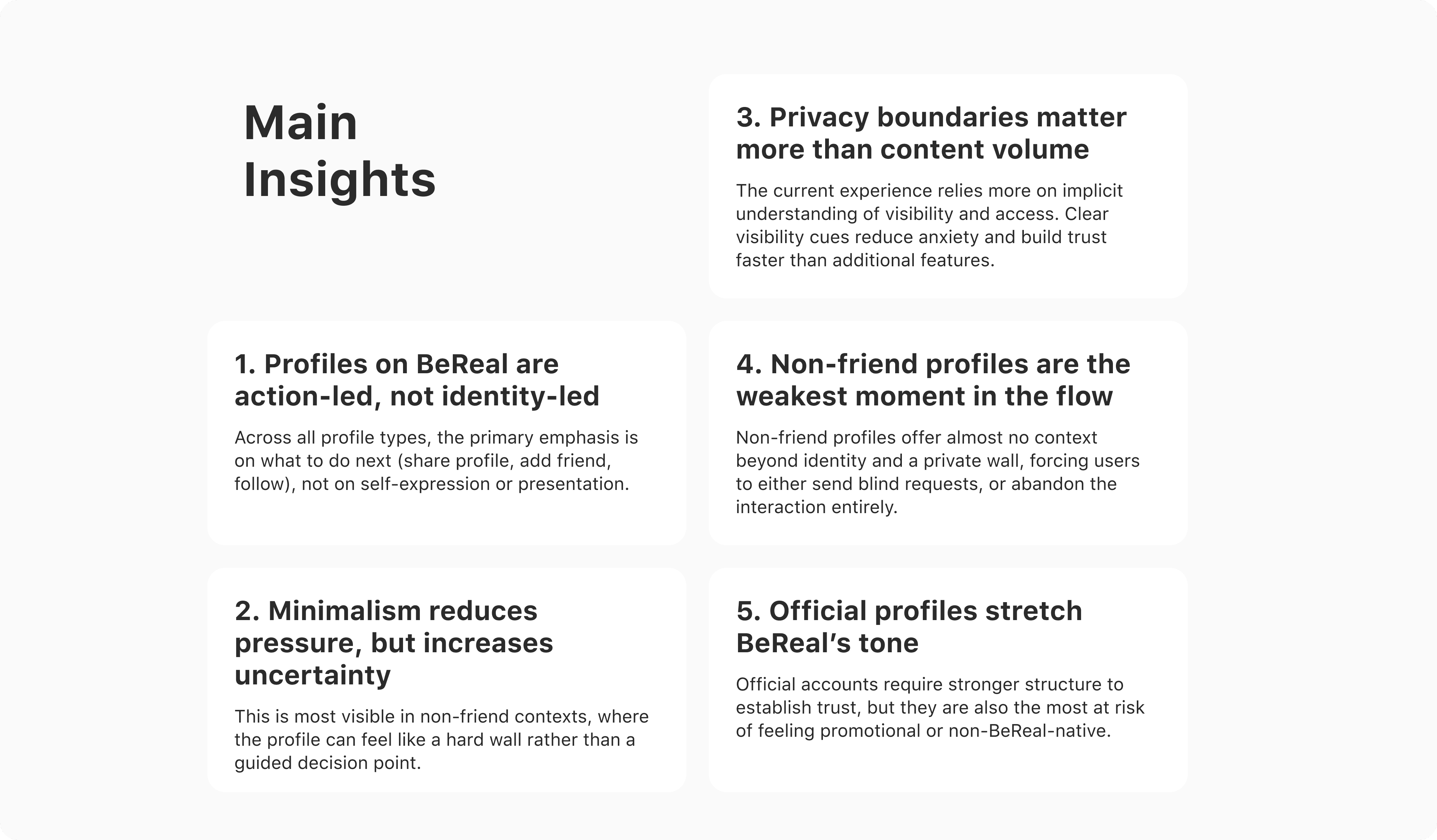
When the interface doesn’t answer those, users fill in the gaps themselves. That usually leads to hesitation or misinterpretation, especially with non-friends or official accounts. The issue wasn’t that profiles were minimal. It was that they were minimal without explanation.
I Started Treating Profiles as Relationship-Aware Systems
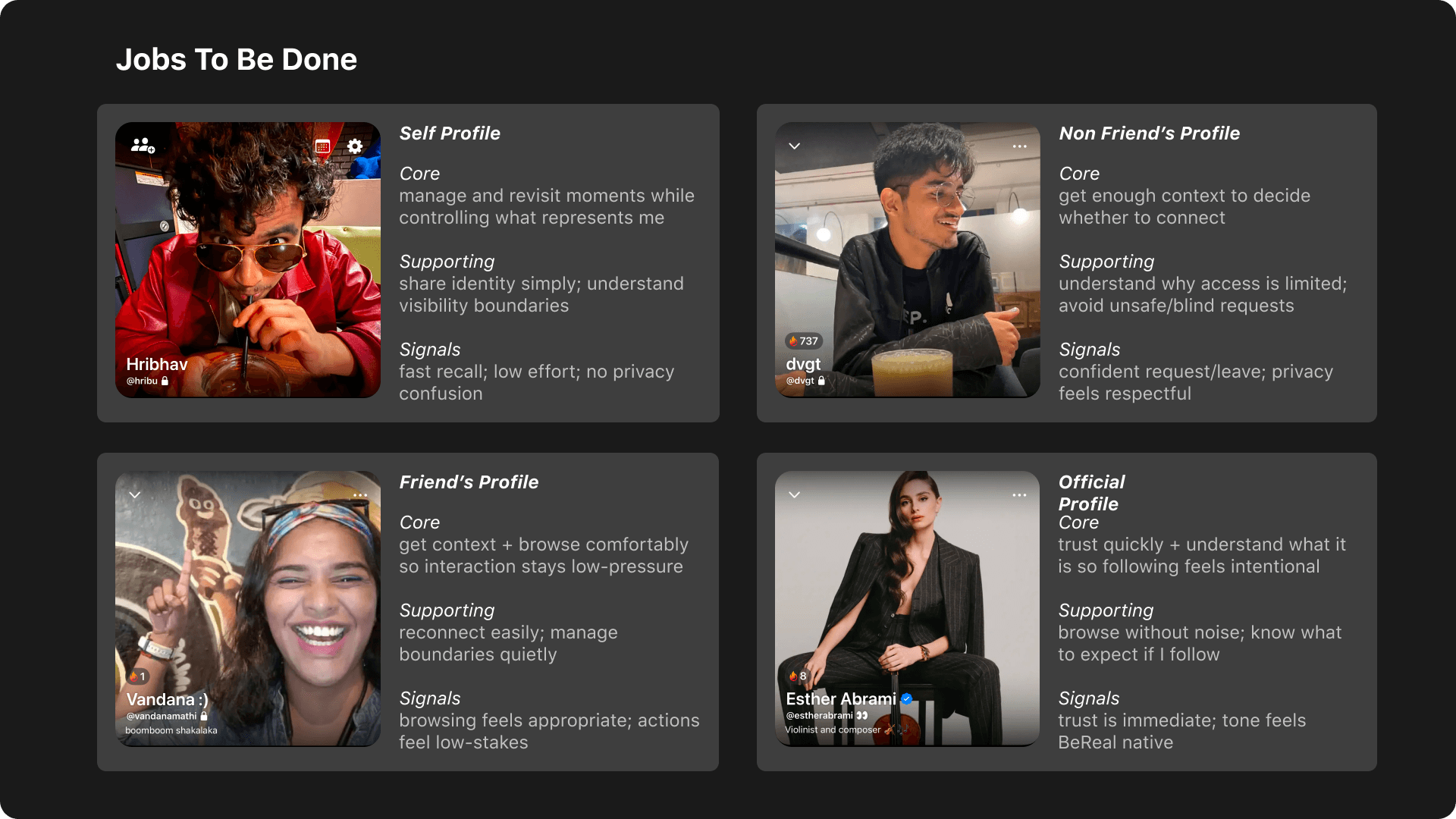
Instead of redesigning screens, I reframed the problem. Profiles aren’t identity pages — they’re relationship surfaces. The same profile needs to behave differently when I’m looking at myself, a close friend, a stranger, or an official account. Trying to force all of that into one static layout was the root cause of the confusion. This led to four clear contexts within a single system: Self, Friend, Non-friend, and Official.
Research Focused on Helping Users Feel Oriented Quickly
This wasn’t a heavy research exercise. It was grounded in long-term use, Jobs-to-Be-Done framing, and a scan of public discussions around BeReal.
What stood out was subtle. People rarely complained about profiles directly. Instead, they talked about discomfort with followers, confusion around visibility, or fear of BeReal “turning into another social app.” The common thread was orientation. Users wanted to understand where they stood without thinking too hard.
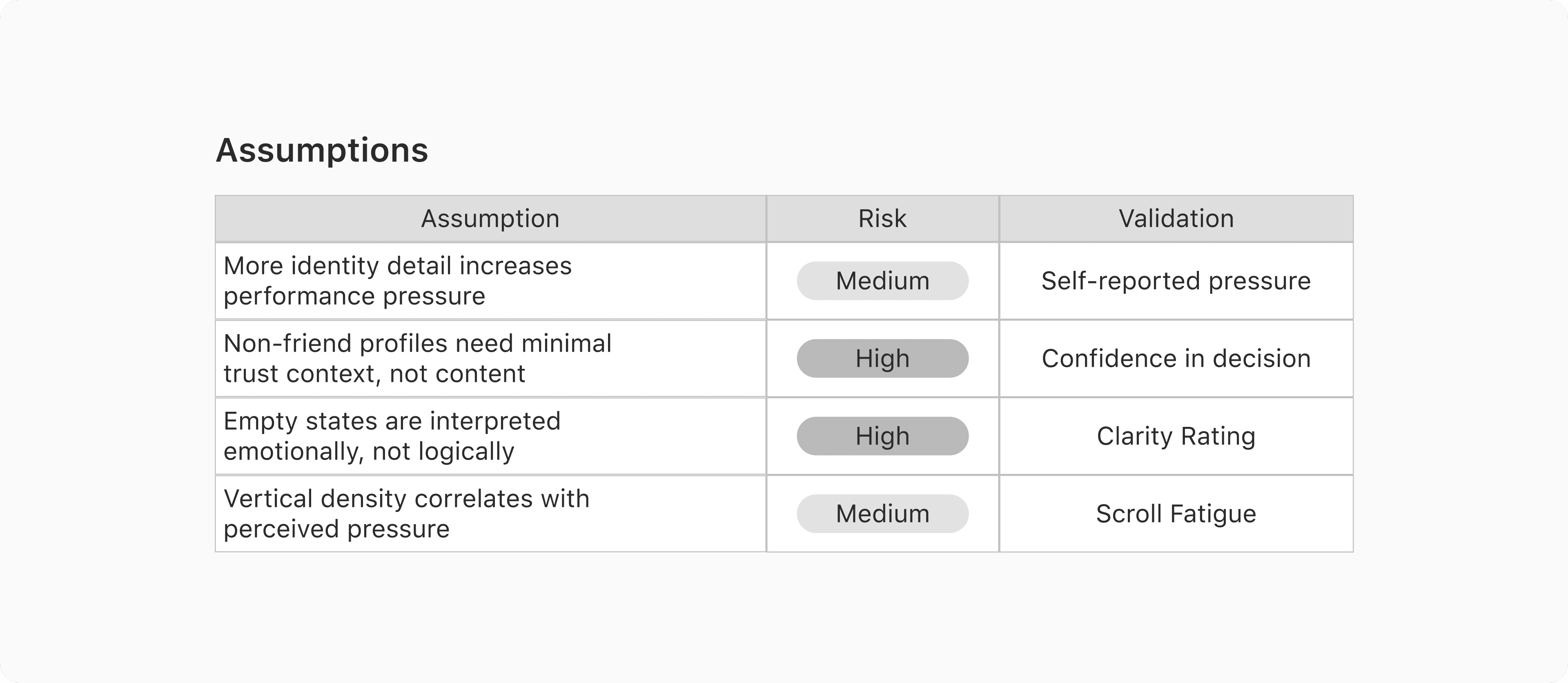
Assumptions and Guardrails Helped Keep the Work Honest
Since this was exploratory, I wrote down my assumptions instead of hiding them. Which contexts needed clarity the most? Where could information create pressure? What should never show up by default? From there, I set guardrails. No follower metrics for regular users. No forced self-curation. No actions before context.
These guardrails acted like bumpers, keeping the design from drifting into familiar social patterns.
Everything Pointed Toward One Thing:
Reduce Uncertainty
Across all profiles, the same insight kept coming back. When users hesitate, it’s usually because they’re missing context, not features. Profiles worked best when they explained quietly why this person is here, what’s visible, and what’s expected. Adding more capability often made things worse. Clarity became the main design goal.
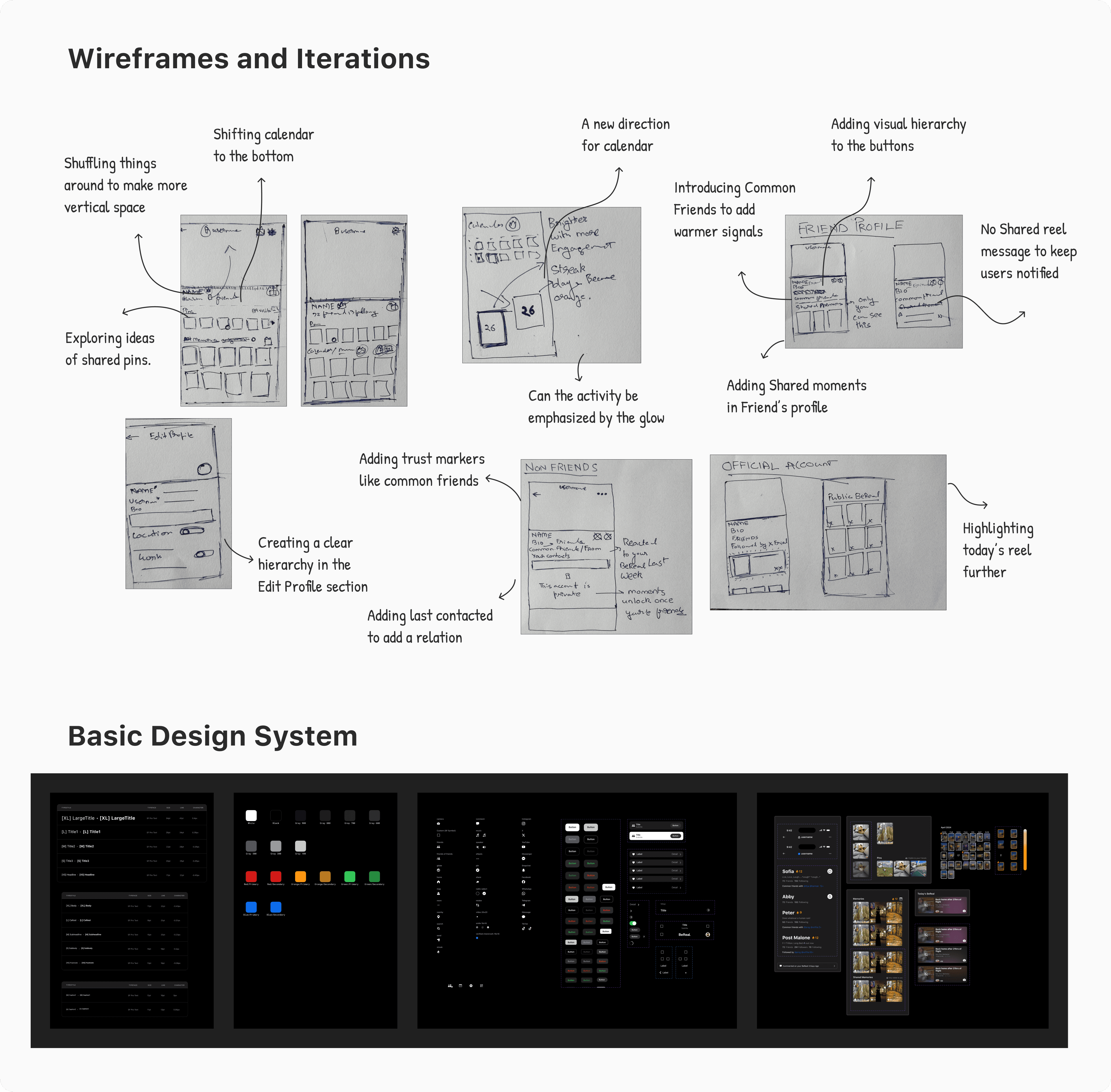
UI Design Focused on Calm Hierarchy and Progressive Depth
Once the system rules were clear, UI decisions became simpler. Identity stays stable. Signals stay subtle. Depth appears as you scroll or tap, not all at once. Spacing, hierarchy, and density did most of the work. There’s very little visual shouting. The interface stays quiet unless the user leans in.
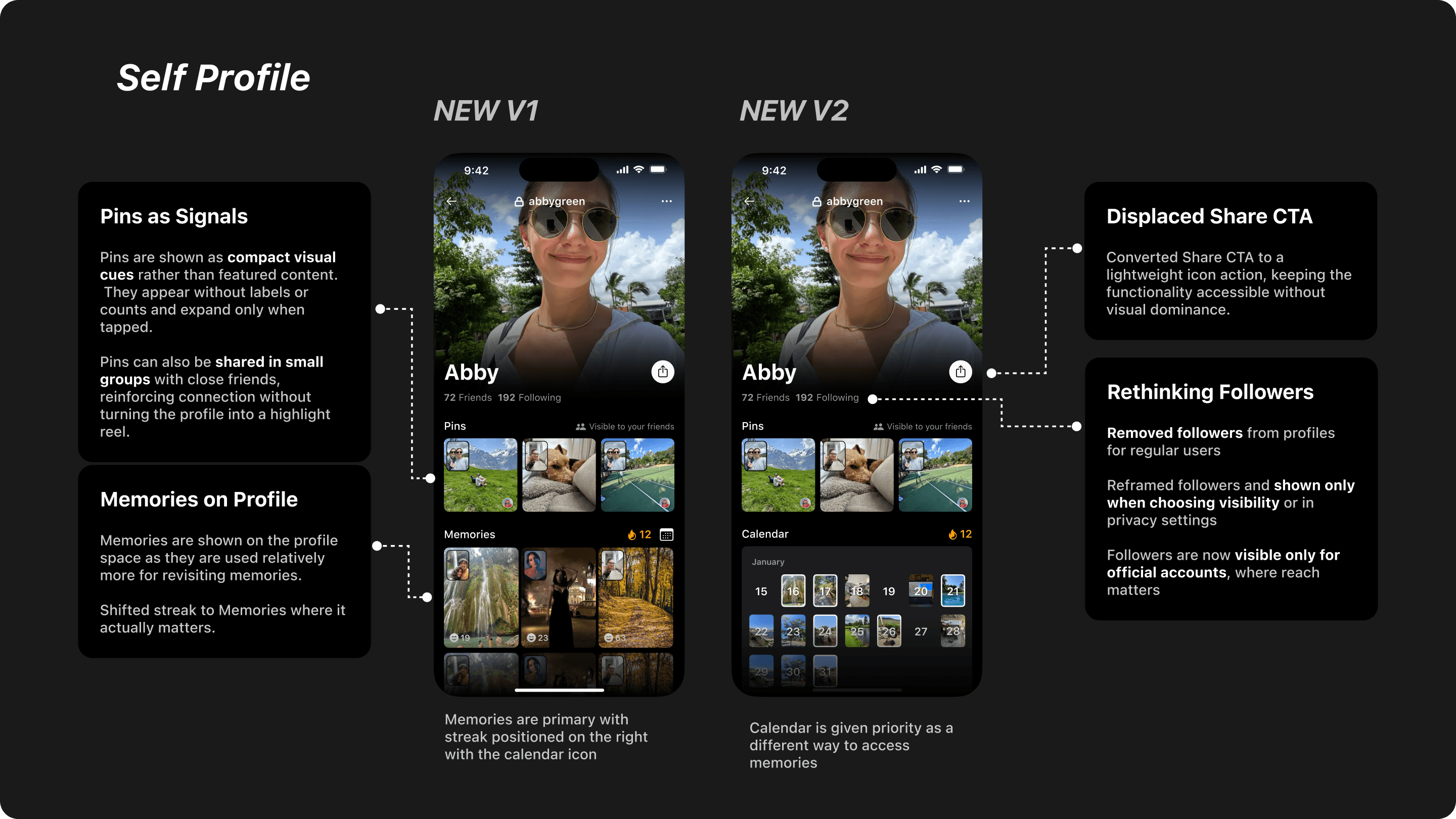
Each Profile Type Emphasizes What Matters Most in That Relationship
Self profiles focus on memory and control. Friend profiles highlight shared moments. Non-friend profiles explain presence before asking for action. Official profiles signal legitimacy without leaning into promotion.
All four share the same structure. What changes is what’s emphasized, not how the screen is built.
That consistency keeps the system flexible as BeReal grows.
The self profile is quieter and more compact, with pins treated as subtle signals and depth pushed into the calendar and archive. The focus stays on memory and control, not self-presentation.
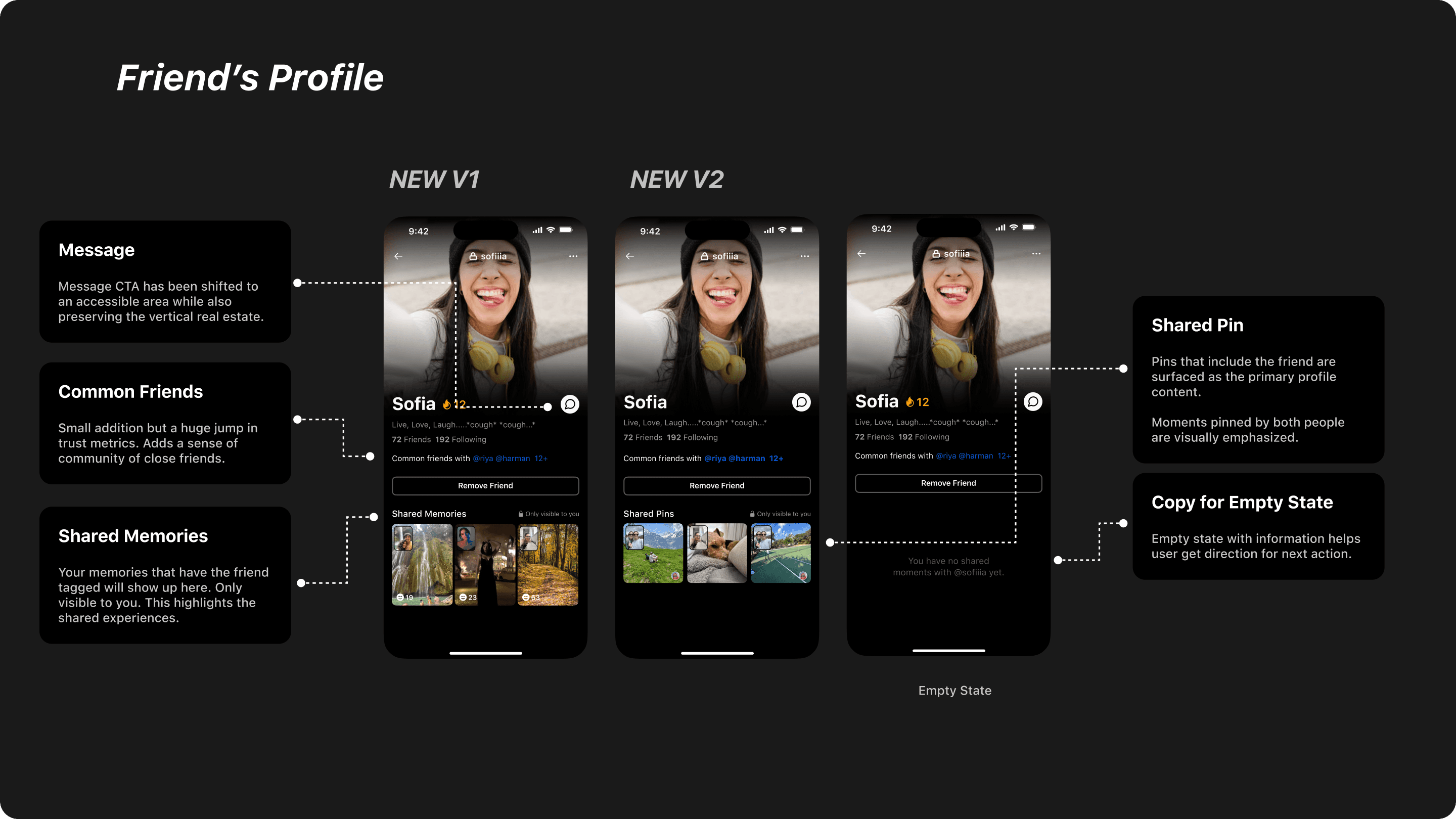
The friend profile surfaces shared context first, using shared moments and lightweight relationship signals. It helps make the relationship legible without turning it into stats or performance.
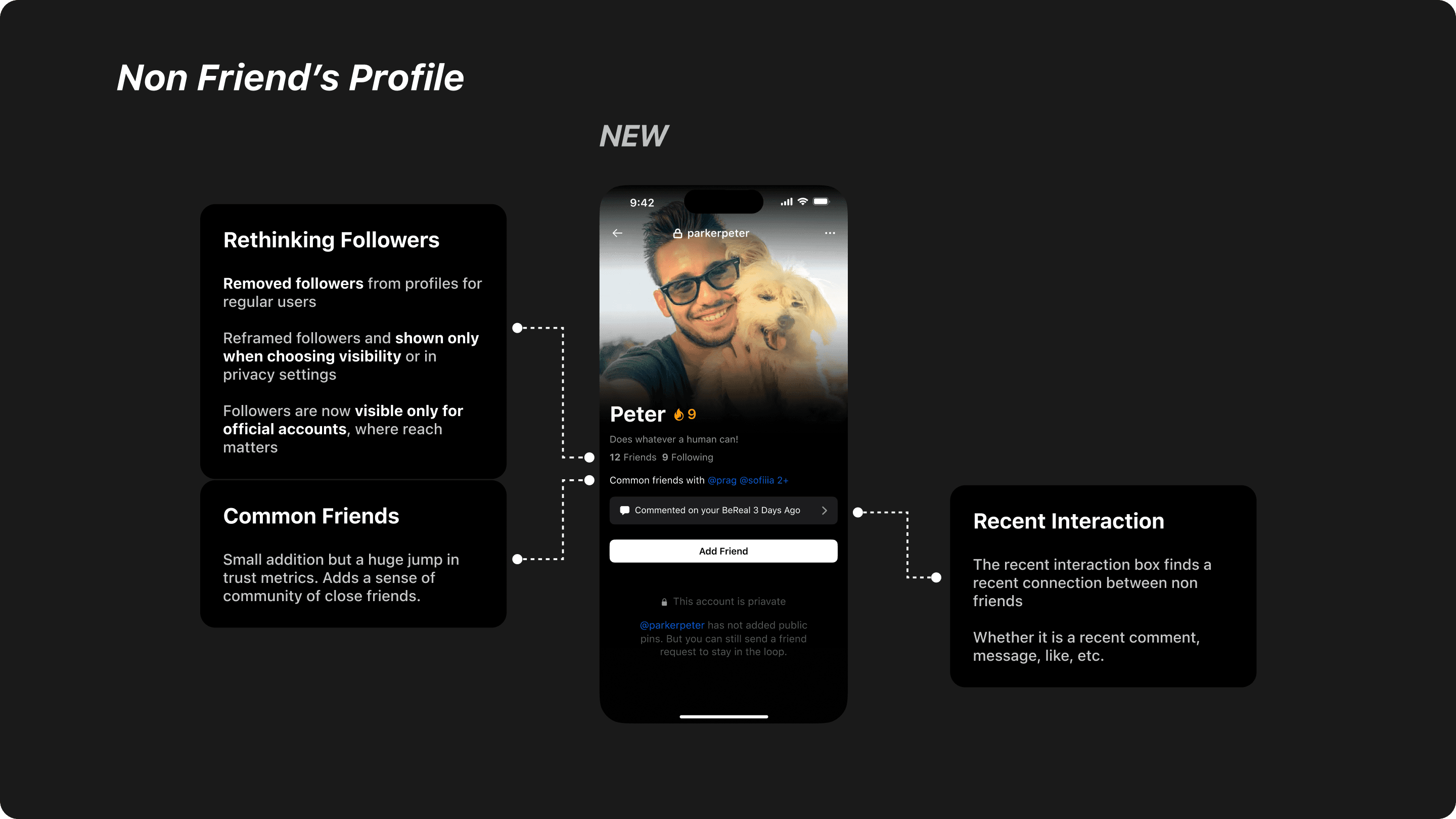
The non-friend profile explains presence before asking for action, adding just enough context to reduce hesitation. Privacy is made explicit, so empty states feel intentional rather than incomplete.
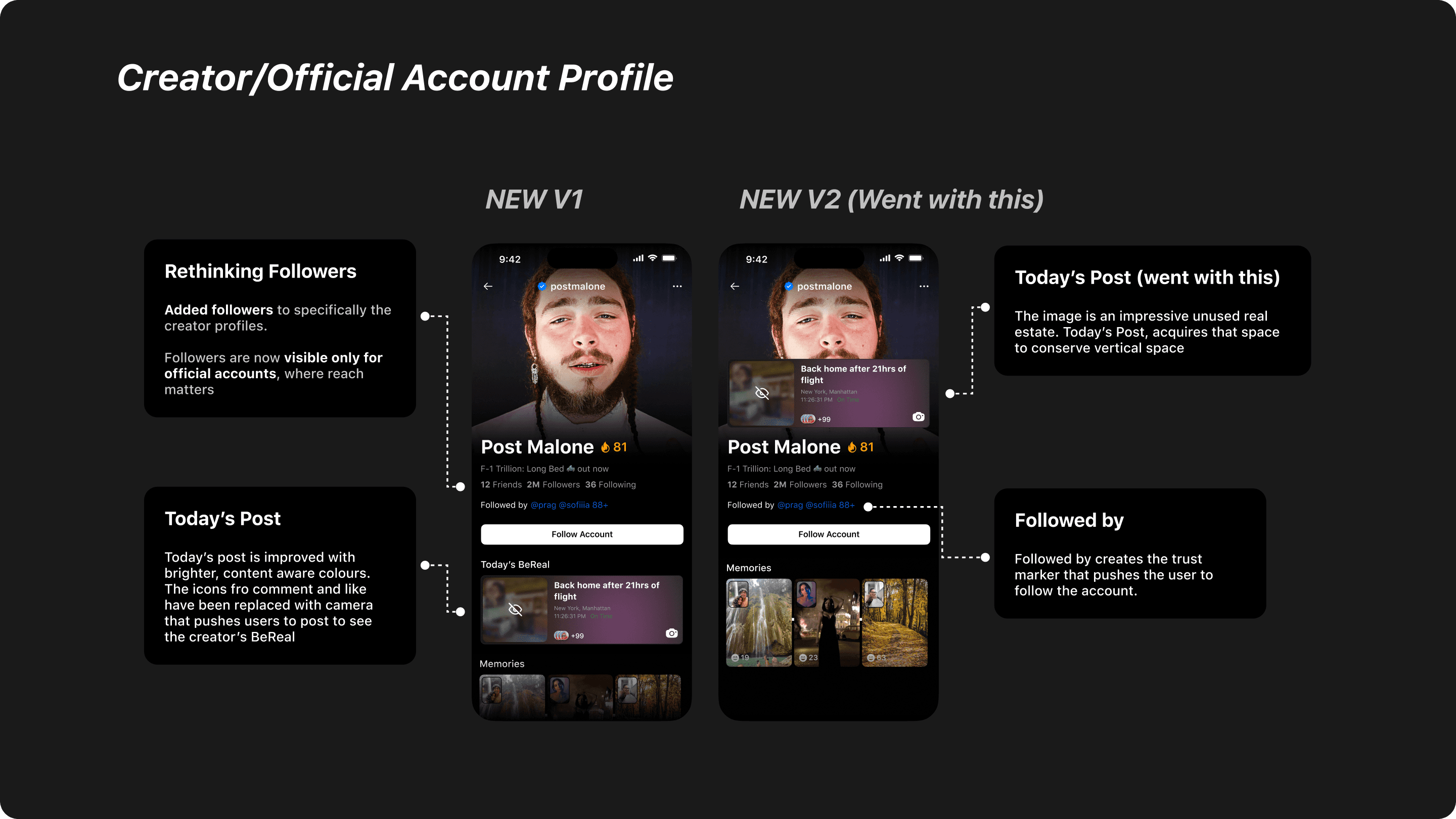
The official profile emphasizes legitimacy and presence over promotion, with softer follow actions and clearer hierarchy. It feels credible and aligned with BeReal’s tone, without borrowing influencer patterns.
Reflections and Open Questions
This work isn’t meant to be final. It’s a direction shaped by product judgment rather than data.
Questions remain. How much context is enough? Where should visibility rules live over time? How do official accounts scale without shifting tone?
Those are conversations best had with real usage and constraints. This case study is a starting point for that discussion.