The Day I Stopped Doing Timezone Math
Sep 26, 2025
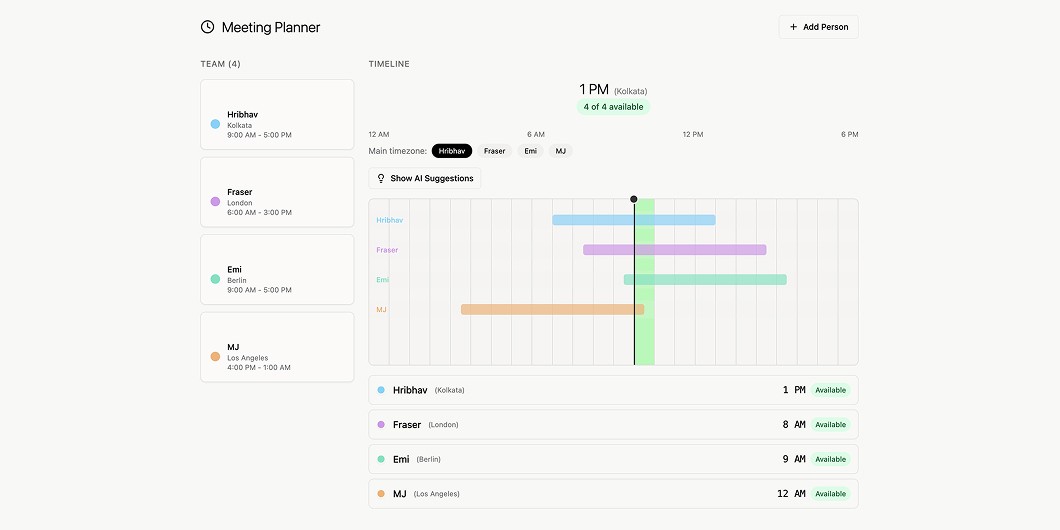
TL;DR. During my summer internship, I worked with a growth team spread across Argentina, Mexico, the UK, the US—and me in India. Without a shared calendar system, every meeting turned into timezone math and guesswork. I built Timezone Sync Meet, a simple planner that suggests the best times to meet, both within and outside working hours. It makes overlaps clear, trade-offs transparent, and has turned scheduling from a 15-minute debate into a 30-second decision.
The summer scheduling mess
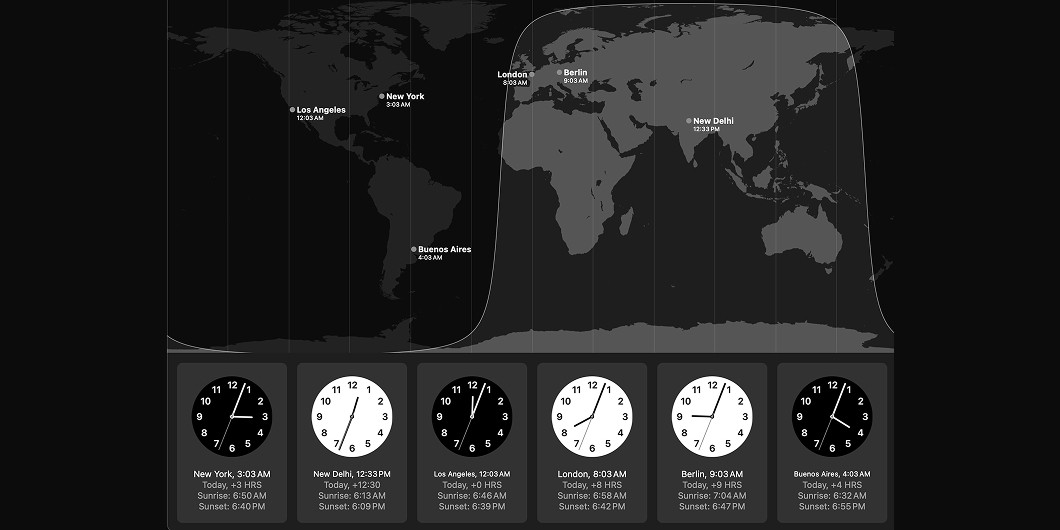
That summer, I interned at a company in London while living in India. My team was everywhere: Argentina, Mexico, the UK, the US, and IST. Every time someone asked, “When’s a good time for everyone?”, the same thing happened:
I lined up multiple clocks.
Tried to estimate each person’s working hours.
Then, I guessed a slot that “looked okay.”
More often than not, it wasn’t okay. Someone would quietly join at midnight or decline because it was too early. And because none of us used Google Calendar religiously, meetings were verbal commitments. Misfires were common.
Why existing tools didn’t cut it
I tried timezone converters and scheduling apps. Most were just clocks, not planners. They showed “what time is it in London vs. Mexico City,” but they didn’t help me see the overlap.
When I needed to suggest a slot, I still had to eyeball all the clocks, add/subtract hours, and pray I hadn’t missed a midnight wrap or half-hour offset.
And the heavier tools? They wanted logins, calendar integrations, or invites—overkill for a team that just needed to agree in Slack.
How this planner changed things for me
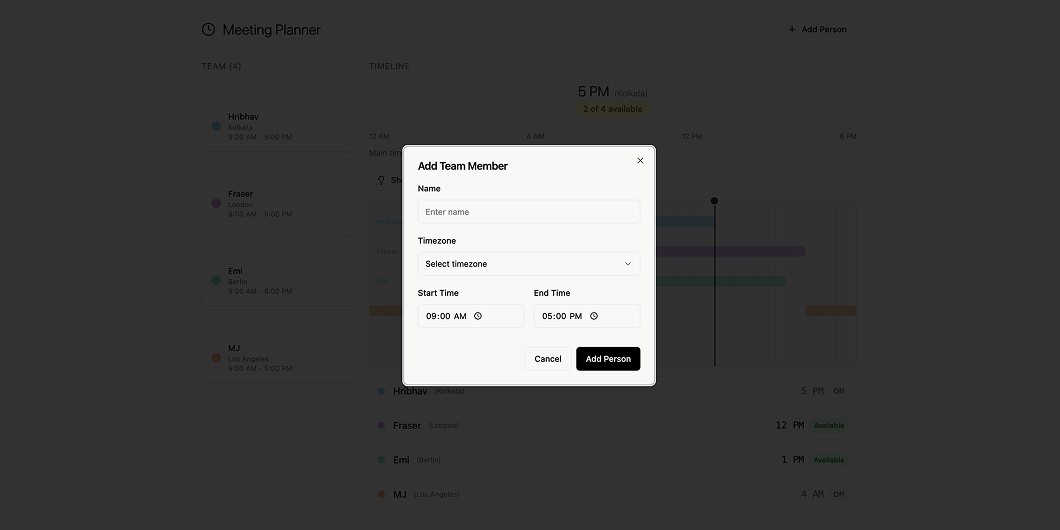
Once I had the planner, the entire scheduling flow shifted.
Instead of mental math, I flip the anchor timezone and instantly see when hours truly overlap.
If there’s no perfect slot, I can explain it clearly: “This works, but Fraser will start late.” That transparency made it easier for the team to accept trade-offs.
Decisions got faster. What used to take 10–15 minutes of back-and-forth on Slack now takes 30 seconds.
I stopped second-guessing myself. I know I’m not accidentally scheduling someone at 2 AM. Meetings became lighter, less political, and way less stressful.
When AI picked the slot for me
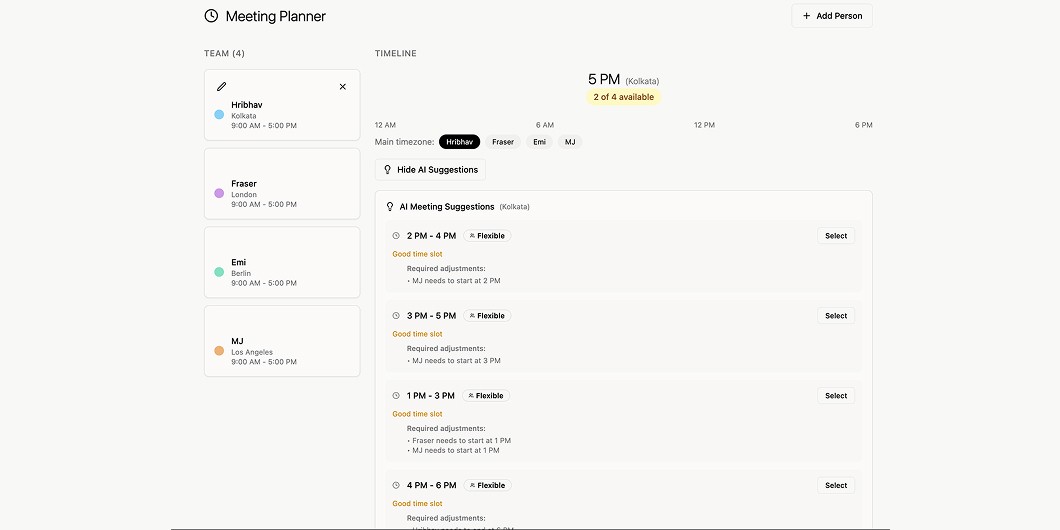
Even after building the planner, I still had to make the final call on which overlap worked best. Sometimes that was obvious, but other times I’d hesitate—should I ask Mexico to start early, or India to stay late?
So I added an AI suggestion layer. It looks at everyone’s work hours, scores each possible slot by coverage and fairness, and highlights the top options. Instead of debating, I can now say: “These two windows are the fairest—pick whichever feels better.”
Powerful tech shouldn’t feel heavy. I shape AI and data into simple, human patterns. I design for outcomes that matter. Less friction, clearer decisions, more confidence